

Taking a Strategic Approach to Net Zero
As the need for a greater focus on living, working and educating in a sustainable world has become ever more apparent, D&A College has been at the forefront of developments. We have led numerous estates initiatives to reduce our carbon footprint by over 70% since 2009 but recognise that this alone is not enough.
We want to affect genuine grassroots educational, economic and social change and have taken a strategic approach to enhance awareness of sustainability, build this within our curriculum whilst creating clear training pathways for students and employers to reskill and upskill to meet the growing demands for sustainable practice across our curriculum, economy and communities.
By pulling together mainstream curriculum delivery with additional support through the Scottish Government’s Climate Engagement Fund (one of only eight organisations funded from 170 applicants) we have created sustainability awareness training that inspires learners, staff, and our communities to reduce their climate impact, with a focus on energy efficiency and financial wellbeing.
Delivered collaboratively across our Learner Engagement, Academic Development, and Digital teams and with external partners (including our College Community Collaborative, Multiply, Energy Saving Trust, and Home Energy Scotland) our climate emergency training has engaged students in sustainability focused learning from areas as diverse as Dance, Textiles, Childcare, and Plumbing, with achievements including;
- 1,452 students and 81 staff upskilled
- 400 community members engaged
- Sustainability outcomes being embedded into assessments
- Climate conversations changing behaviours in energy use, car sharing, and diets
- Driving referrals to Home Energy Scotland
- Creating an open public education resource.
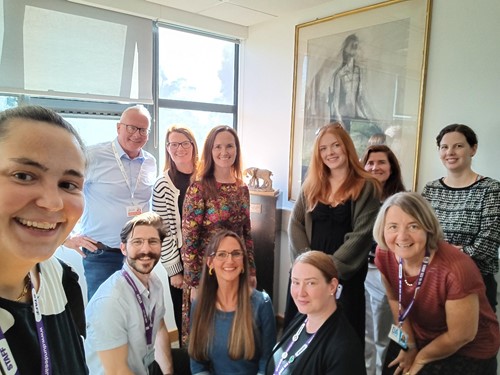
This work has established a foundation for ongoing community engagement around sustainable living and working that has sparked interest and engagement in wider curriculum developments and the embedding of sustainability within classroom delivery and curriculum.
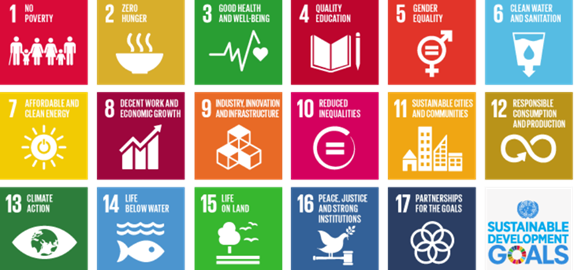
This embedding of sustainability within our mainstream delivery has been underpinned through the creation of practical tools to map the UN Sustainable Development Goals (SDGs) against our pre-existing courses, units and learning.
The mapping process works for any curriculum, with support provided to assist subject specialists to ensure that the SDGs are understood and are used and mapped appropriately.
This face-to-face interaction supports awareness raising of the SDGs and encourages professional discussion and reflection on the delivery of sustainability as an integrated (rather than add on) strand of the learning process.
All staff involved received training to develop their understanding of carbon literacy and the SDGs. The breadth and depth of the SDGs are covered to ensure the wider issues of people, planet and prosperity are explored and reflected upon. This awareness underpins much of the discussion and reflection needed as mapping begins.
Each map focuses on one course and all the units that are taught within it, with each unit, mapped against the 17 SDGs under the following headings;
- The SDG is included in the specification and therefore taught and assessed.
- The SDG is not included in the specification, not normally assessed but is covered.
- The SDG is not included in the unit specification.
The subject specialists involved have been incredibly passionate about delivering a learning experience which prepares students for life outside of College and it is here that the SDG mapping clearly highlights not only what is required within a unit specification, but also where professional educators can go ‘above and beyond’ to inspire, educate, and inform their students about sustainability out with the direct confines of the curriculum.
The approach rolled out across D&A encourages staff to pause and reflect on the true professionalism and exceptional practice that can positively influence climate awareness and change the way we act and consume.
As this work has rolled out, we have recognised that visualising the volume of student experiences available to engage with the SDGs brings renewed vigour to learning and teaching.
As multiple courses in a department are mapped, it creates a clear pathway of the sustainability learning opportunities available to students as they progress through their learning journey. This supports scaffolding of sustainability learning, offering opportunities to create better links and contextualisation between courses, bringing sustainability and the importance of climate awareness to life.
Achieving our ambitious net zero targets isn’t just about awareness, however, and D&A has a clear strategic focus on delivering the skills and training needed across our economy to reduce emissions, minimise energy use and transition to cleaner technologies. Supported by our sustainability ambitions we have invested heavily in meeting the skills needs of new industries and ways of working.
Our sector leading Electric Vehicle Training School (established as a partnership between Dundee & Angus College and Robert Lawson and Sons) is a direct response to the growing demand for electric vehicle (EV) skills within the automotive sector.
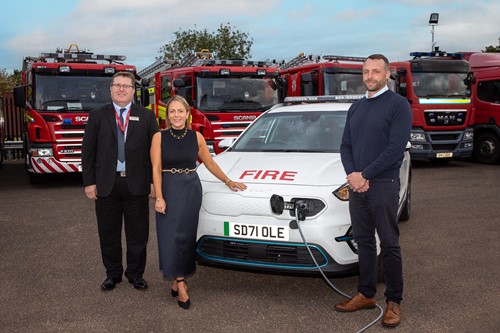
National provision in this area was limited, with a clear gap in training capacity and industry-ready qualifications. Through our partnership with industry experts, we have successfully developed and scaled our EV training offer to meet the demands of a rapidly changing industry, creating a comprehensive and sustainable pathway from introductory learning through to advanced qualifications. This has positioned D&A College as a leading provider of EV training.
To date our EV Training School has trained 230 vehicle technicians up to Level 3 IMI Award (SCQF level 6) ensuring those within the industry are equipped with the knowledge and competencies required to work safely and effectively on electric and hybrid vehicles. In addition, the programme has supported the training of 108 Scottish Fire and Rescue Service technicians right across Scotland, enhancing their ability to respond safely to EV-related incidents.
As a strategic priority, D&A College has developed a full suite of electric vehicle qualifications, strengthening our curriculum offer and ensuring long-term sustainability in this key growth area.
The D&A EV Training School provides learners with industry-recognised qualifications, improving employability, supporting career progression, and enabling technicians to adapt to the rapid transition towards low-carbon transport. It has ensured that industry professionals and emergency services are fully prepared for the challenges and opportunities presented by electric vehicles.
Building on our EV success, the development of Offshore Wind provision at D&A has also been driven by the rapid growth of the sector and the clear need for a skilled workforce.
Through strong partnerships with Coast Renewable Services, Montrose Port Authority, Inch Cape, and Vestas, we have created innovative pathways into the sector, including the Futures in Offshore Wind course, designed as an introductory programme with direct links to employment opportunities and industry engagement.
To meet multiple demands, the College has created a range of flexible learning options, including full-time, part-time and progression routes into placements, apprenticeships, and employment. Strong industry links have enabled guest lectures, site visits, and real-world insight to be embedded within the curriculum, ensuring relevance, engagement and employability.
From August 2026 D&A will deliver the Vestas Offshore Wind Turbine Technician Apprenticeship, creating a new structured pathway from senior phase education into high-value employment within this critical clean energy sector.
As well as meeting the skills needs of new industries and sectors, the strategic development of the D&A curriculum has a clear focus on meeting the skills and qualification needs for those working in roles including the increasing adoption of low‑carbon heating systems such as heat pumps, district heating and hydrogen ready technologies; large‑scale retrofit and improvements to building fabric; the integration of renewable technologies including solar, wind and energy storage; the use of smart building controls and performance monitoring; and the promotion of fair work and inclusive growth.
These developments highlight our commitment as the largest regional skills provider to meet the skills needs of a low carbon economy valued at up to £750million across the region.
The D&A Net Zero curriculum is directly aligned to these priorities and building on our staff and community awareness and curriculum mapping experience, Net Zero principles are embedded as core competencies across multiple disciplines.
This ensures learners develop both the technical skills required to deliver Net Zero solutions and the systems thinking capability needed to apply those skills effectively in real-world contexts.
A defining strength of our sustainable curriculum is its employer led approach. Through close engagement with local authorities, housing providers, contractors, utilities and third sector partners we are ensuring that our curriculum is ever responsive to emerging technologies and fully aligned with regulatory, procurement and funding requirements.
Against a backdrop of significant economic transformation driven by the climate emergency, infrastructure investment and labour market change, Net Zero has become a central driver for our regional economy across housing, construction, energy, transport and supply chains. This transition demands a workforce equipped with advanced technical capabilities, strong sustainability awareness and an integrated understanding of how systems interact.
As the region’s principal skills training and vocational education provider, Dundee & Angus College plays a critical role in enabling this transition through targeted education, workforce upskilling and sustained employer partnership. We have developed a clear strategic approach and integrated a wide range of activities and curriculum to support the College and our regional economy and local communities to move confidently from Net Zero ambition to genuine Net Zero delivery.